- See more at: http://blogtimenow.com/blogging/automatically-redirect-blogger-blog-another-blog-website/#sthash.fBBcEurs.dpuf Casa de Sion

Wednesday, April 14, 2010


First I want to start off with thanks to Laurisa who made us beautiful blankets to give out at our new birthing center. Next is A.B.Combs school for their collection of shoes and cash that was donated to our program. Also to Kid to Kid for their great donations of clothes. We will start next month doing a clothing distribution to the Mayan kids and pregnant women.
We have gotten to the great point of having enough donations and enough porgrams in Guatemala to need to send a container down. Anyone who knows how to do this, please write me as this is new for me. Also we will need to raise money for the shipping. But I have investigated and this is the cheapest way to ship. Plus I have a hospital administrator who is building two new hospitals and has promised me equipment from the old one for our clinic. Also I am hoping for a small tractor for our gardens.
Two fundrasing ideas. One is to buy cheap banks. Dale Earnhart ones are supposed to be cheap at the Dollar Stoes. Then take 3 or 4 pictures form our projects and laminate them and wrap around the cans. Inventory and put in 30 to 50 stores. Collect once a month. I know a group who has made in the last little bit $4500.00 from this.
Another one is one that I have a picture of on this blog. We had 3 wonderful men come down for a week. Before they came they donned a Pennyman costume and went to their kids' school. They taught the children the value of reading and then challenged them to collect a penny for each page they read for the next month from mom, dad and graandparents,etc. They told them the pennies would be used for Spanish books for our tutorials. They brought down $1200.00 worth of books for our kids. I am going to try Pennyman in some of our schools along with a powerpoint on our programs. The pennies could be used for food or educational supplies or school supplies or whatever. Thanks Mike and team. These great men also did a milk and formula distribution and gave nutrition to 30 families and 100 kids. Robert, our new director, started a file on each family we help. Mike and friends also finished the tin roof on the clinic. And they brought the money for a new house for Jose. Very basic and not hugh to us USA people but beautiful to Jose and his family. Will have pictures soon of it. They also changed the locks on all our facilities both in Pana and Los Robles.
PICTURES FROM THE BOTTOM
View from the new clinic to our other facilities
Boys at our tutorials reading the new books
Two of the men who came
The clinic almost done
The clinic again
The new yard
Dominga cleaning the upstairs room
Kids from the tutorial
PENNYMAN

Join us at http://www.facebook.com/casadesion

Monday, April 12, 2010

Pics of March Medical team


Here are some more pics. The bottom one is the clinical team that came the first part of March. Next is a fun trip they took on Lake Atitlan. The next is the leaders of the team. One of the nurses and one of the clients.
The rest of the pictures are of clients who came to the medical clinics. We love all you volunteers. keep on coming.

Wednesday, April 07, 2010

TRANSITION TIME II

We have been going through a difficult transtion time for the last 3 weeks and now that it has settled down some, we have the time to write about it. First, Pedro has "resigned". We will miss some of the ways he has helped in the last 3 years.

We hired a new director, Robert Morris. We met him at church when we lived in Panajachel. He tutored our kids during that period and we got to know and trust him. He currently runs his own educational foundation helping with scholarships for Mayan kids, and we think he will facilitate getting ours in order. He seems to have a heart for the programs that we are currently running and the new ones we plan to initiate.

After research we have decided to postpone reopening the orphanage and concentrate on the community programs. With the country wanting to reopen adoptions there is much pressure to present a good face on the current hogars. This means a lot of regulatory and financial pressure on us. We have been professionally advised to do a boarding school instead as this goes thru the Minister of Education.
We have decided instead to focus on the chldren livng at home with their Mayan parents. For half the amount of money it takes to care for 30 children in a hogar we can help two to three times as many children that go home to their parents at night (and without the government hassle). The local children go to school in the mornings then eat lunch with us and get after school tutoring. They also get lessons on health and hygiene along with donations of clothes and shoes. As we have seen from recent visits from American volunteer doctors, the general health of the community is VERY poor. We have our hands full helping these children and their parents increase their level of subsistence. We have always felt a little guilty about spoiling a few orphanage children with an American-type lifestyle in a hogar while the community children were so needy. And most of the children that are in hogars are not true orphans. They are children whose parents place them in the hogars to give them the advantages that we are giving to these community children.

With the decreased costs we can increase the lunch program and the incaparina / formula programs. We plan to add prenatal and child development classes that also feed the mothers and their children. We would like to start a preschool / daycare that would run everyday. And Spanish and English classes. We believe that Guatemala will have to pull itself up by its own bootstraps. We want to provide the energy--i.e. food and other nutritional programs--and educational background--tutoring and scholarships. We have found that the school next door loves our volunteers and will utilize your volunteer time. There will be plenty of work for volunteer teams to provide the time and material donations these programs will need to get started and to keep them running.

Much thanks for your faith in us and your continuing support
Vicki and Jody Dalia

TRANSITION TIME


There have been some major changes that have happened with our projects in Guatemala and it is time I let you know what is happening. But first I wanted you to see some special pictures of my family. One is of Max, my grandson who just turned two. isn't he precious. He looks alot like my son Joey. Joey is not his dad tho. My daughter Jenn is his mom. The one with alot of peole is me and my husband with various kids and grandkids. It was taken the day of Will's ,grandchild number 17, name blessing.
There is a picture of Will in his swing with his cousin Katie. Another picture of three of my five grandbabies born this last summer. Cooper, Colbey and Chloe. My family likes the letter C. Another one of my four oldest still living at home. Big John, Heather, Scotia and Caleb. And last a picture of Will's older sister Tali.
All these pictures are so cute, I will continue the TRANSITION TIME in the next blog, coming up right away.

Monday, April 05, 2010

Pictures from Pediatrician's visit

https://mail.google.com/mail/?shva=1#inbox/127bb6c9d91010ad

Donation

Just wanted to thank Danny Massey and his wonderful group of kids who donated 12 boxes of fantastic shoes. They are all great shoes and all came with a pair of socks. The Mayan kids will sure love them.

Friday, April 02, 2010

Pediatrician's report with pictures.


My family went to Guatemala March 18th to 24th. We spent four days doing medical clinics-the first In San Andreas and the next three at the orphanage in Los Robles. We had read as much as we could about the health and struggles of those living in the Highlands but of course it is a different experience to see it first hand. We read from the World Health Organization and World Food Bank sites that over 80% of the Mayans living in the highlands are malnourished. We saw much evidence of that. Besides, heartbreaking story after story when a child would complain that their stomach hurt and they would say yes they eat but it was just a piece of bread or a tortilla in the past few days, there was also much physical evidence to support this is long standing. It isn't surprising that so many are anemic with the difficulty of getting enough iron-foods available to them are not fortified and meat is too expensive. This would leave the main sources of iron beans and green vegetables. Although many eat some beans they aren't able to get the necessary 10 mg a day. The frequent pregnancies have to leave the women who where likely anemic to start with even more anemic. Nearly everyone we examined had an elevated heart rate. Likely this is due to anemia and dehydration. There were other physical signs to confirm this problem of anemia. Virtually the only people we saw who didn't have an elevated heart rate were the women who were hypothyroid. The most likely cause is iodine deficiency. This is another thing that we don't have to think about but our thyroids need to work properly-it is added to salt in our country. We saw at least 20 women with obvious thyroid goiters-they also had many physical signs of hypothyroidism-fatigue, hair loss, decreased heart rate, skin rashes along with a feeling of hopelessness. I can't imagine trying to walk everywhere and take care of a large family when your metabolism is so slow as they said, "I feel like I can't even move, or get out of bed." We felt very lucky that with the exception of three adults with hypertension we were able to provide the medication or supplement that they needed. We brought about 200 courses of antibiotic treatment and were grateful that the Mercy ship had left several hundred more. We saw many people with infections that this medication will really make a difference. We saw several children with pneumonias. They had been unable to sleep and had difficulty eating because they were working so hard to breathe. They were likely malnourished before this infection hit but then with the fevers, cough and infection things had gotten worse. I wish we could have been there long enough to see what a difference it made but you would expect that there would be some difference within a day or two. We saw many women with bladder and kidney infections. Most of these women had been suffering with symptoms for years-all had symptoms for at least 6 months. It sounded like it had started initially in their bladder but by the time we saw them it had spread up to their kidney's causing increased fever and pain and the potential to spread into the bloodstream and cause an even more serious infection. These women likely felt better also within a day of starting antibiotics. One women had been suffering for several years. She explained that her husband had died and she had no way to get any help or medication. Everyone was very grateful. There were many also with common questions parents have about their children's growth and development. I was happy that there was much back and forth discussion. I wasn't just telling them what I thought, but, I would try to explain something and then they would have many questions. Dozens of children came by themselves to ask about things-some normal and others things that needed to be treated. We were able to meet with three teachers while we were there and talk with them about things we think they can do to improve the health of their students. We were happy that even with the large classes they have they seemed to know the families well. Many of the kids complained of feeling lightheaded and dizzy when they would play. For all of them, we saw that they were dehydrated and their blood pressures fell when they stood up. This would cause this symptoms. Drinking more water is a challenge since clean water is not readily available but it will help. We brought 120 lice combs from the National Pediculosis Foundation and these were much appreciated by the families we saw. We also saw many people with intestinal parasitic infections. We were able to treat this as well and also gave out 30+ bottles of Iodine which serves the dual purpose of purifying the water and replacing the iodine they need. We gave out thousands of iron supplements and over 3000 children's vitamins. We also have out 125 bottles of prenatal vitamins to women that were pregnant and or breasfeeding. Each bottle we gave out had enough supplements for at least 4 months. We went to a couple of pharmacies in Pana and learned that the cost of vitamins in Guatemala is about 5 times greater than what we had purchased in the states and also they were not as good-didn't have 100% of all the necessary micronutrients. We gave out a thousand or so calcium supplements and insufficient calcium intake is a big problem. Lack of refrigeration makes intake of cheese, milk, yogurt etc. almost nonexistent also with the high price. So, they do get some calcium from beans and some drink powdered milk. We saw several dozen people with frank rickets and most all the kids would complain of pains in their legs consistent with a lack of calcium. We handed out numbers the first three days that we had clinics. We had slips for 487 people. We treated extra people in many families and we saw at least 60-70 people on the day that we didn't count. Sister Cranney gave out vitamin and formula supplements for at least 50 more. On our day back, Pedro called and said about 30 people had shown up that day to be seen as well. The need is overwhelming but one person and family at a time we felt we were able to make some difference. For some, it was a better understanding of a chronic medical problem, or helping to arrange for follow up care, for others it was treatment of an acute medical problem or an explanation of what had or was happening to them. For all of them I have to think that our visit helped them know that their struggles aren't invisible. My kids had fun playing with their kids and so many things that happened brought home to me how similar things are around the world. They have the huge additional problem of malnutrition that puts them always on the edge and makes even somewhat minor problems big and the big health problems on top of malnutrition are huge. I will sign off now because I could write for days. The people were uniformly warm, gracious and kept saying God Bless You. I'm sure He will bless them. For our part we left multivitamins for at least 6 months for the feeding program. Nearly all the kids had huge problems with cavities. We are hoping to supplement fluoride as well-fluoride in our country has decreased the cavity rate by nearly 70%. We also want to add calcium supplementation to the multivitamins. Pedro, Gil and Dominga are doing a great job taking care of the kids at the orphanage. We know giving them the vitamins they need will help. They will feel better and do better in school etc. We are hoping this might also be a draw for others around the orphanage who haven't yet used their programs. We know people were excited about the vitamin supplementation and the new birthing center. Thanks for the opportunity and coordinating everything during our visit. Jerrilyn

Here are the pictures that gregg her husband sent.
https://mail.google.com/mail/?shva=1#inbox/127bb6c9d91010ad

Monday, March 29, 2010

FIRST REPORT FROM THE PEDIATRICIAN


We are trying to organize our pictures and can definitely send you something within the next couple of days. We saw 487 people on the days that we counted. This is likely an underestimate as many asked for medical treatment and advice for family members that were at home. On the day that we didn't count because we didn't have any extra help we saw at least 60 additional people so the total would be 547. If we counted the people we sent food supplements home to-they said they came just for vitamins and food supplements, in addition to who was seen the number would be close to 600. We gave out all of the vitamins except those that we left with Dominqa and the iodine we left with her to purify the water and to help with iodine deficiency. We left 6387chewable children's multivitamins. We gave out over 10,000 prenatal vitamins and over 3,000 children's multivitamins. We also gave out thousands of iron supplements-we bought all the pharmacy had. I think most everyone is anemic. Nearly all the kids had scarred up eardrums and many with active infections, lots of pneumonia and skin infections. I think the ear infections may well be all the smoke they are exposed to and that of course contributes to the wheezing. We left some antibiotics but we gave out a lot with all the people that we saw. We did leave nearly 500 doses of the albuterol to use in the pulmoaide and did leave a nebulizer for you to use. We brought 120 lice combs that we gave out. I don't know if you are interested in keeping records of this but Colette did some fundraising with her nonprofit and spent at least $1500.00 in buying supplies-vitamins, meds etc. We gave out several hundred hand knit hats as well as hundreds of baby outfits. The combs, formula and some medications were donated. I can look into trying to find some prenatal cards for following blood pressure weights etc. We saw at least 20 women that had goiters-they all also had marked signs of hypothyroidism-very low heart rates, in the 40's with skin rashes, hair loss and they all described they could hardly get out of bed. It is amazing they got there. Likely this is due to iodine deficiency, we treated that. They really do need vitamins and they know they need vitamins. Obviously they need to increase protein/calorie intake but the vitamin deficiencies may be even more easily treated. You should think about giving the kids fluoride supplements-it decreases the cavities by 68% and the kids could definitely use that. Lots of people with obvious rickets-bowed legs etc so getting more calcium is huge. We gave out lots of tums, I think that is a good fit since so many have stomach issues to start with. I know I am rambling but I would really lean towards treating pain with tylenol not ibuprofen. I tried to look up if anyone has looked into the incidence of Vitamin K deficiency which would cause bleeding problems but I couldn't find anything. It is generally uncommon in the newborn period but with their very restricted diets it is a possibility. You aren't supposed to take it when you are pregnant because it affects the platelets so that right there cuts out lots of people. There were lots of common questions about puberty and child development. I know access to food is a huge issue but you aren't supposed to wait too long to at least introduce some solid foods or you get a tongue thrust and trouble with eating-we saw several kids with this. Several adults with ganglion cysts around their wrists-likely from the repetitive motion of weaving. This isn't dangerous but as you can imagine feeling a lump makes people nervous. We had one girl with tetany-treated her with magnesium and calcium and the missionaries were going to follow up with her. We had more than one person ask if their child was going to die. I guess unfortunately that is part of their experience but pneumonia should respond quickly to antibiotics as should skin infections. I realize that people do die from those problems when not treated but it was sad for them to think that maybe things wouldn't get better-hopefully they will.
I'll get you a more complete report soon. Thanks. Jerrilyn

Sunday, March 28, 2010

Helping Medically fragile Kids


We were blessed with a reverse walker for Samuel. The PT in the medical team that came the first of March who worked with Samuel said he needed a reverse walker. I posted it and a friend of mine in ME with CP kids told her PT person and she came up with the perfect one for Samuel. Sherrie will send it to me and I will take it with me when I go.
The two babies with the cleft palates got specialty nipples for their bottles and we are working on sending them to the hospital in the Dept. of San Marcos that can put them in their malnutrtion ward and build their helath so they will be ready for one of the surgical teams coming in May or Aug.
Also here are two more pictures of the early March medical team.

Saturday, March 27, 2010

PROGRAMS

here is a list of the programs that we have ongoing now.
75 school children that come 3 days a week for lunch.
35 school children that receive 3 hours of tutorials 5 days a week.
275 children who receive one bag of incaparina [ a nutritious drink ] twice a month.
30 infants who receive a can of formula twice a month.
6 students who receive the money to go to school
4 children who have life threatening illnesses that receive care from us
medical clinics
construction teams
a birthing room for women and their midwives to use

Programs we want to add
lunch for 75 children 6 days a week
more children and infants on incaparina and formula
more student scholarships
more children who need medical help
a once a week prenatal clinic
a once a week child development class
a once a week health education class
sewing classes

Friday, March 26, 2010

Excellent Artical on Third World Malnutrition

This article expresses alot of the same things that jerrilyn , our wonderful pediatrician , found when she did clinics last week on 400 of the Mayans in our region. This was esp. true of the children and the pregnant ladies.


Malnutrition in Third World Countries

by Sally Urvina

Ms. Urvina is a homemaker and free-lance writer living in Pullman, Washington. This article appeared in the Christian Century May 23, 1984, p. 550. Copyright by the Christian Century Foundation and used by permission. Current articles and subscription information can be found at www.christiancentury.org. This material was prepared for Religion Online by Ted & Winnie Brock.


--------------------------------------------------------------------------------


There is enough food to feed everybody in the world now; in the year 2000 there will still be enough food for everyone. And yet 500 million people are malnourished. The realities linking these statements are a relatively inconsequential part of our lives here in the United States, but in Third World countries these realities are part of the shape of living. It is primarily in the third World that protein energy malnutrition (PEM) affects 500 million people and kills 10 million every year.

At the Sixth Assembly of the World Council of Churches in Vancouver, the problems of hunger and malnutrition that deeply divide the Third World from the First and Second Worlds were seen to extend into the body of Christ. Peoples in the Third World struggle every hour with the effects of hunger and malnutrition while the main concern of peoples of the First and Second Worlds is the possibility of nuclear war. The difference evident in these priorities is a reflection of a difference in attitudes, which is, in turn, a reflection of differences in culture and experience.

Another gap is that, though churches and church-affiliated groups in the US. are the largest private givers of overseas food aid, the problem is not a world shortage of food. Thus, what we hope to accomplish with our aid -- to keep people from starving -- is not being achieved. The problem of malnutrition in the Third World is a complex one that most Americans have no experience with and thus do not understand well. But only through better understanding lies any hope for a solution and for more effective use of the money and energy devoted to overseas food aid.

Last fall Michael Latham, director of the Program in International Nutrition at Cornell University, delivered a series of lectures at Washington State University in Pullman. Washington. The material in this article is based on those lectures and on a subsequent interview.

Born and raised in Tanzania, Dr. Latham attended an English boarding school in South Africa and went on to university and medical school studies in Dublin. Then he returned to serve in the town where he had been born. Over the years most of his work has been in the Third World.

Early in his career, Dr. Latham dealt with the case of a child suffering from kwashiorkhor, a form of malnutrition caused by a lack of both protein and energy-giving food in the diet. The child’s parents insisted that he was getting enough food, largely consisting of cassava. a root vegetable high in bulk but low in protein. The swelling of the body due to edema from the kwashiorkhor hid his malnourishment and it was difficult for the parents to understand that his diet was inadequate. When the condition did not improve, the family brought the child to the clinic again. The third time that Dr. Latham saw him he was better, probably because, being older, he was more aggressive at the table.

Many incidents similar to this underscored for Dr. Latham the value of the preventive, public-health approach to medical problems, rather than the traditional curative approach. Several years after this incident, the importance and influence of nutrition in preventing disease became clear.

Today, as Dr. Latham points out, death and disease in developing countries are often primarily a result of malnutrition. The so-called “big four” are: protein-energy malnutrition (PEM), with 500 million people affected and 10 million dying every year; vitamin A deficiency, causing xerophthalmia and blindness, which affect 6 million people a year and kill 750,000; endemic goiter, caused by iodine deficiency and affecting 150 million people a year; and nutritional anemia, affecting 350 million people a year.

One of the most important adverse effects of malnutrition is that the body becomes unable to defend itself. People with kwashiorkhor are unable to produce antibodies after being given various vaccines, including typhoid and diphtheria. The formation of the white blood cells, essential in fighting infection, is reduced in severe PEM, and the ability of white blood cells to engulf and consume bacteria is decreased.

Infectious organisms are also more likely to enter the body. Inadequate amounts of vitamin C cause small vessels in the body which bring nutrients to the skin to become fragile; the skin then breaks down more easily, facilitating the entry of infectious organisms. A deficiency of niacin, or vitamin 83, causes pellagra, with its associated skin breakdown.

Kwashiorkhor leads to fatty changes in the liver and swelling of the body due to excess fluid in the tissues. There is also a decrease in intellectual development.

For people in developing countries, the effects of malnutrition are drastically compounded by infection and by the decline of breast feeding. Dr. Latham’s lectures focused on both of these factors.


The adverse effects of malnutrition increase the body’s exposure to infection while at the same time decreasing its ability to fight the infection. When infection is present, loss of appetite occurs. The resulting decrease in food intake is compounded by traditional methods of treatment, such as “starving a fever.” The body loses increasing amounts of nitrogen into the urine, usually as a result of the breakdown of protein in muscle tissue. On recovery, more protein is needed to replace the lost amino acids.

In Third World countries, children suffer from many different infections, often having some kind of infection for 200 days of the year. With each infection, as protein is broken down and nitrogen lost, the nitrogen deficit grows, making it more and more difficult for the body to rebuild the amino acids needed for new protein formation. A slowing of the children’s growth rate and normal development is one result.

The nature of the relationship between malnutrition and infection is found in the fact that their interaction within the body is synergistic; that is, the effect of the presence of both of them at once is greater than the sum of the effects of malnutrition plus the effects of infection. Dr. Latham used the examples of diarrhea, measles and parasitic infestations to outline this synergistic relationship.

The most common cause of death in young children in developing countries is diarrhea (also a major fatal disease in New York at the turn of the century). In Indonesia it kills one out of ten children per year. The infections start after the time of weaning, from eating contaminated foods and from lack of hygiene. The cause of death is not the infection itself, but dehydration from the resultant water loss.

Some parasitic infestations are a direct cause of nutritional deficiencies. One-quarter of the world’s people are infested with roundworms. Hookworms, also prevalent in Third World countries, suck blood from the lining of the gut, thereby causing iron deficiency anemia. Another worm, the fish tapeworm, causes a vitamin B12 deficiency. It is common to have multiple infestations as well. In some parts of Kenya, 90 per cent of the children have hookworm, so it is not surprising that, in some of the country’s primary schools, 50 percent of the pupils were found to be anemic.

Measles, now considered a mild childhood infection in this country, has a death rate in Mexico 180 times higher than in the United States. In some African countries the death rate from measles is 400 times that of the U.S. In England, one person in 10,000 dies from measles; in West Africa, the figure is one in 20. The differences in these rates are attributable to the nutritional states of the people who contract measles. The disease severely affects those whose immune systems have already been eroded by malnutrition. Complicating the problem is the poorer response to vaccination in malnourished children.

Dr. Latham also reported on some solutions that have been found in dealing with these three infections. For diarrhea, oral rehydration has replaced the use of intravenous fluids. In what an English medical journal, the Lancet, has called one of the most important scientific findings in the past 20 to 30 years, the addition of glucose to the standard oral rehydration fluid of salt and water greatly increases the body’s ability to absorb needed water. Mothers can be taught to make oral rehydration fluids and to make sure that the child eats regularly during the illness. Further, within the next ten to 20 years. a vaccine against rotaviruses that cause diarrhea is expected to be developed.

Because some parasitic infestations are so common, Dr. Latham suggests regular, routine deworming projects until a community’s sanitation is improved sufficiently to eliminate the worm. With measles, studies have shown that the use of dietary supplements decreases both the death rate and the severity of infection.

Dr. Latham concludes that a community’s nutrition problems must be dealt with in conjunction with health care, sanitation and immunizations. Such a holistic approach has been shown to be the most effective. Just as the problems are synergistic, so are the solutions.

If a poor mother in a developing country chooses to bottle feed rather than to breast feed her infant, she thereby chooses greater chances of sickness and death for the baby. Four different influences can turn bottle feeding into a tragedy: economic, hygienic, nutritive and immunologic. The effects of these influences are threefold. First, the infants literally starve. Second, they are more exposed to infection. Third, they do not have the immunological protection that comes in breast milk. What follows is based on Dr. Latham’s analysis.


Formula is relatively expensive: for a three-month-old child, it can cost 50 to 60 per cent of the minimum wage in some developing countries, plus the price of the equipment. Because of the high cost there is a tendency to stretch the formula by overdiluting it. This practice leads to nutritional marasmus, a condition resulting from severe protein and calorie deprivation.

Breast feeding is cheaper and always nutritious; the only added cost is for the mother’s extra nutritive needs. Although the components of breast milk will vary depending on the woman’s health, even an undernourished mother is a remarkably efficient producer of nutritious human milk.

Contamination of the formula, the bottle or other equipment leads to infectious diarrhea. Breast milk comes sterile from the breast. And anti-infective properties cannot be put into formula, nor is there any indication that such a process will be possible in the near future. Conversely, at least a dozen anti-infective factors are found in breast milk, including antibodies, lysozyme, lactoferrin and interferon. Among the functions performed by antibodies are preventing bacterial invasion of the intestines, neutralizing toxins and killing viruses. Splitting the cell walls of certain bacteria is one function of lysozyme; this enzyme also aids the effectiveness of one of the antibodies. Lactoferrin binds iron that is essential for bacterial growth, and interferon provides early help in the body’s defense against viruses.

Another contribution of breast feeding is the decrease in fertility of a nursing mother, often adding nine to 12 months to the spacing between births. In India, breast feeding is more effective for birth control than contraception.

In light of the clear superiority of human milk for babies, it is very disturbing to note the decline of breast feeding in Third World countries. In Chile in 1960, 90 per cent of women were breast feeding their children after the first year: by 1968, that figure had dropped to less than 10 per cent. In the 20 years between 1950 and 1970, the percentages of Singapore women who breast fed beyond the first year dropped from 80 to eight or ten.

Dr. Latham attributes this decline largely to a desire to be chic or modern. Reversing the trend involves the difficult task of changing attitudes. A place to start this task is in the medical community. Instruction and texts in medical schools have emphasized formula feeding and de-emphasized breast feeding. Physicians in the Third World, often trained in Western schools. convey this emphasis in their patient care, and breast feeding appears to be second-best. Medical students need to learn more about nutrition, and in particular the role of breast feeding in infant nutrition.

Another approach to the problem lies in changing trade policies. Third World countries could import less formula, and advertising practices could be more closely regulated.

The root cause of malnutrition is inadequate distribution of the available food, for the world produced enough grain last year to provide 3,000 calories per person per day. However, we are not able to get the food to the people who need it most. This statement refers not to food handouts but to policies that influence purchasing power, food prices and distribution practices.

Economic gains measured by gross national product or industrial output are not reflected in improvements in the lives of the majority of people; their purchasing power does not increase. The peasant farmer in Kenya, Tanzania or any of the developing countries is having to work harder in 1984 than in 1954 or ‘64 to earn enough money to buy a hoe or a gallon of kerosene. And the people are inadequately paid for their agricultural products and minerals. Compare these prices in upstate New York: imported bananas cost 35 cents per pound, while a pound of locally grown apples costs 48 cents.

The inequity in such a system is reflected in the occurrence of malnutrition. Protein-energy malnutrition, anemia and blindness from vitamin A deficiency are very closely associated with poverty, only rarely occurring in the affluent population -- even in developing countries.

Food distribution -- the use of the food produced -- is linked to national policies. The United States raises 2,000 pounds of cereal grain per person per year; of that total, 150 pounds is used for human consumption, while 1,850 pounds is fed to animals to produce meat, eggs and dairy products. The U.S.S.R. imports grain to use as animal feed. In contrast, China produces 450 pounds of cereal grain per person per year; 350 pounds goes for human consumption and 100 pounds to feed animals. The Philippines exports calories in the form of sugar and coconut oil every day, while half of the country’s children are malnourished. India is self-sufficient in food production.

Dr. Latham concludes that the lack of food and micronutrients is due not to acts of nature but to acts of people. What is needed is change to improve the quality of life, not change to get people to be more like ourselves. If this change is to happen, better understanding between people and revolutionary shifts in attitudes and policies must prevail.

There is an urgent and immediate need for several improvements: more voice for the people in the national policies which directly affect them: withdrawal of U.S. support for undemocratic governments; and more adequate pay for people who live in developing countries.

A huge impact could be made right now on the death and disease attributable to the synergism between infection and malnutrition -- but not with fancy hospitals, such as those found in capital cities in many developing countries, or with elaborate manufactured foods or expensive infant formulas or over-trained doctors or advanced food technologies. Rather, the means could be relatively simple if the affluent nations resolved that the reduction of deprivation is an important goal, and if the governments of developing nations made it an important priority.

Dr. Latham’s sensitivity to the poor pervades all his comments. When asked how he had developed this sensitivity, he said that he had been shown a tremendous amount of loving-kindness and generosity by poor people. One particular incident that stands out in his memory occurred when the Rufiji River in southeastern Tanzania had flooded. Dr. Latham was flown in to give care to victims stranded by the floodwaters. During the following 36 hours, people approached him continuously to offer him whatever bits and scraps of food they had, even though their own need was much greater than his.

The loving-kindness shown in such giving reminds us that “Blessed are the merciful, for they shall receive mercy,” And their merciful acts are only dim images of God’s kindness and compassion. As the Holy Spirit leads us to consider the devastating, complex problem of malnutrition, let us do it prayerfully, asking that our hearts be prepared to bring forth the fruits of the Spirit: love and kindness.

Wednesday, March 24, 2010

OUR KIDS


Lots of people want the orphanage to open. So do we. We have found out tho that some of the legal paperwork has not been done. We hired someone esle to investigate and this is what they found. So the opening is not imminent. But for everyone who wants to help and work with kids, we have a ton of them you can help. They are not helped by anyone because they are not orphans. But they are from desperately poor families and alot of them are being raised by single moms. or grandmoms. There are 75 that come to our place all the time. They are ages 5 to 16 and come for lunch and to be tutored by the teacher we have hired. They have younger and older brothers and sisters who also don't get to eat and pregnant mothers. But I stray. These children were all seen in pediatric clinics last week. They are all showing signs of malnourishment. Their teeth are all rotten. They don't drink except when they come to our place. They are anemic. They have not had any parties done for them except what we have done. They don't receive new clothes except what we have given. They don't get field trips or special projects, so if you are coming to help us, these children will appreciate everything you do for them. Whether it is music, crafts, art projects, special lunches, parties, clothes distributions, English classes, the children will love you for your time.
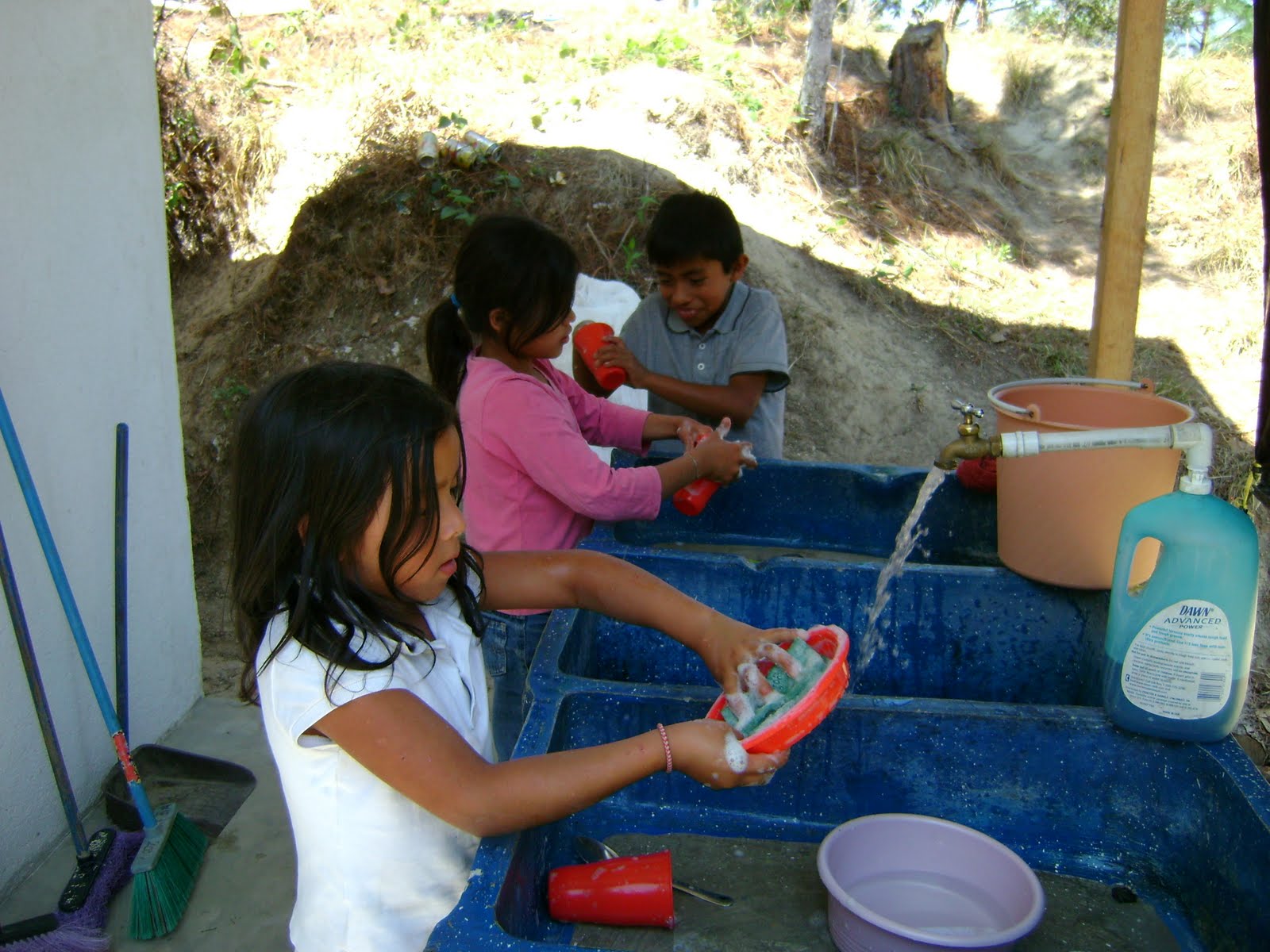
The pictures are of our teacher. I know he looks young, but he is great. With donations from you and us,we have supplied the teacher with toothbrushes and shampoo. The kids have none of this. He works with them to help improve their hygiene. A picture or two of teehtbrushing and hair washing. He helps them learn to settle disputes without fists.
thanks for your help.
Vicki
http://www.facebook.com/casadesion

Thursday, March 18, 2010


Thanks to Laura at cliniclink.org, who posted my blog about needing help for the cleft palate baby, help has come. We have specialty bottles we can get right away. We also have a hospital in San Marcos who will take all the children if malnourished and nurse them to better health. They will work to get the baby healthy enough to have surgery. They have a surgery team coming in May that can fix his cleft palate. Now I just have to connect everybody so it happens. We had several other people who offered to help such as COTA. I plan to connect with them also. thanks everyone.
The baby is being held by Debbie my volunteer coordinator who ran the clinic yesterday. The other picture is of the family of the baby. debbie says all kids need help.

thanks
Vicki Dalia
http://www.casadesion.blogspot.com
http://www.facebook.com/casadesion

Cleft palate baby

Wonderful news. Thanks to some great people we have received help for this family. A hospital that has a malnutriton ward for the kids and is doing cleft palate srugeries in May. Also a surgical team in Chimalt this week if we can pull it together that quick and the baby does not need a few weeks of nutrtion first. HF must have this cild in his hands and heart

Wednesday, March 17, 2010

Cleft Palate Baby Needs Help

I wondered a few days ago if we would ever see a baby with a cleft palate that needed help. Well at the pediatric clinic today we did. A very poor Mayan family showed up with 4 children under 8. All were glassy eyed and severely malnourished. The 4 month old baby had a really bad cleft palate making it difficult for him to take any nourishment. We gave him formula and bottles and infant cereal. We gave the rest of the family 15 bags of incaparina. They had walked a long ways to get to the clinic. We want to continue to help them and esp. to get the babies' lip fixed. To do this we need your help. Write me to let me know you want to help.
thanks
Vicki
http://www.safehomesforochildren.org
http://www.facebook.com/casadesion
20.vicki@gmail.com

great Fundraiser

One of our Safe Homes friends, Jeanette P, did a great fundraiser in the Chicago area. She raised $4000.00 with more possible donations. We really appreciate it and can certainly use it. Jeanette can you give us the details of what you did in case some other folks want to do the same thing.

Here is another fundraiser that a friend of mine does for his 501c3. He started out raising $20,000 a dinner 5 years ago and this last year raised $60,000. Here is what he does.
Finds a dining hall that has good food and can accommodate the number of people he wants. The one we went to 6 years ago had about 600 people at it. Then he has his volunteers go to businesses and the business contracts to pay for a "table" Each table that sits 8-10 costs the business $250.00. This pays to decorate the table and for the food for that table. Then he sends out the invites. Invitees are told this dinner and the speaker costs them nothing. But they will be able to make a donation as the hat will be passed. The dinner is served, the speaker speaks and does a slide show, a donation slip and envelope is passed to each person and the hat is passed. The year we went, my husband who is the biggest tight wad in the world wrote a check for $500. I about fell over. SO IT DOES WORK.

Vicki
20.vicki@gmail.com
http://www.facebook.com/casadesion
http://www.casadesion.blogspot.com
http://www.safehomesforchildren.com

Monday, March 15, 2010

MANAGERS NEEDED

Mature couple or single adult needed to make a volunteer commitment[ you need to provide or raise your own financial support altho life in Guatemala is economical] of a minimum of 6 months and preferably a year or two to manage our orphanage in Guatemala. We are 25 minutes from Lake Atitlan [ you can google this ] and a cute little vacation town of Panajachel. There is plenty of staff so it is not a labor intensive job. It is mostly applying American standards of dress and routine and religous training to children of all ages. Must be able to direct people and work on your own. Please pass the word.
thanks
Vicki
20.vicki@gmail.com
http://www.safehomesforchildren.org
http://www.casadesion.blogspot.com
http://www.facebook.com/casadeson.com

Saturday, March 13, 2010

getting ready for our next clinic and new donations


My friend Debbie arrived in Guatemala this week with her family to help with various projects. She is the one providing us with all the new pictures. She will work with Pedro on getting everything ready for starting to take children. Such as painting more cubbies, filling them with clothes, hanging room decorations for the kids, sorting donations. She is also taking primary reponsibility for the Pediatric clinic being held three days next week. Two of the pictures are of Hugo's wife and Debbie making posters for the clinic. They made 15 and will distribute them to 6 or 7 pueblos. The other pictures are of donations Debbie brought down with her. They came from a group of Utah high schoolers who collected material donations and $100. We sure appreciate their love. The others are from a man in CO who collects stuffed animals and gives them to programs like ours. The community kids will love these.
Debbie has come on board with us as our volunteer coordinator. She has done a volunteer program in the past for another orphanage and we are glad to have her expertise. If you have a son or daughter, or you for that matter, that wants to participate in a well run volunteer program contact me. It costs about $1000 a month, but all the details are put together esp. care taken for their safety. She has found the perfect house about 1 mile from our facility and we are now looking for the perfect houseparents.
Become a fan of ours on facebook. www.facebook.com/casadesion.
thanks for your interest
20.vicki@gmail.com

Our new yard and more pictures of the clinic


Back in Sept./Oct. when I was in Guatemala I met with my good friend Evelyn and her friend Ingrid. They decided we needed a yard out front. So they went back and a few weeks later my daughter Erin flew out to CA. Evelyn and Ingrid and Erin did a big fundraiser for us. Ingrid sponsored Nelson, the community child who had won so many prizes but had no money to go to middle school. The three of them helped us raise enough money for a yard and the clinic. Pedro and Jose wanted a yard that would withstand lots of rain, earthquakes and children so all the tables were built out of cement. The grass is starting to grow and they are putting in a sidewalk for the kids to walk on. Eventually we will buy umbrellas for the tables so they are more pleasant in the sun.
They also raised the $20,000 we need to build a small 4 room clinic. The clinic is definitely progressing as you can see. Rumors are it will be finiished in a couple of weeks, but this is Guatemala so I will believe it when I see it.

Thursday, March 11, 2010

Fundraiser

There is a big fundraiser being held tonight in Chicago. We aprreciate the effort and pray for its success.

Another fundraiser idea I have would be a bunch of 5K runs/walks in different cities. Seems like it would be simple to organize. Find a spot to run. Find people to run. Get sponsors. Collect money. Another group raised $60,000 like this. Could this be a project Eagle Scouts could do? I know some gregarious high schoolers could put this together. ANY TAKERS??????

Our Clinic


Here are some pictures of our new clinic. Today the walls are all the way up and they are starting the roof. I hope it is done and I can be there for the first birth when I go down in May.

Wednesday, March 10, 2010

Another great volunteer

Here is one of our wonderful doctor volunteers. She will help alot of pregnant women and children. Check out her daughters website. This is a link to my daughter's nonprofit group. She turned 17 last week and as I mentioned before is crazy for babies.
http://www.barablessings.com


We were planning on bringing a pulmoaid that we can leave there and I have about 250 doses of Albuterol for it.
60 cans of powdered formula
We were also planning on bringing 2 oz measuring containers to help the mom's with proper mixing of the formula. We have 100 of them. 2 oz to one scoop. We were going to give that to them. We also have hundreds of hand knit baby hats-we were planning on bringing not sure how many yet. Colette has been working with all the fifth graders at an at risk school in East Oakland teaching them how to knit baby hats. They think they will have 60 more finished by our trip. The principal came down and said usually the dynamic would be that your school would do something to help our school. It isn't often that our kids get to do something to help. We definitely need pictures of those hats on babies for the kids.
As for the vitamins. I think it is really important. It will go further to improve health than most other things we could do. Supplementation of folic acid really does prevent birth defects-serious ones like the things that cause hydrocephalus. I do worry about giving them a bottle-the way the bottles come is enough for 6 months. We have 62 of these so far. I wonder if the mom's come to your orphanage twice a month if we could divide out enough for 2 weeks and then have them come back. If you looked at it more like a medicine than a bottle of vitamins maybe that would work? There is only so much you body can absorb so you hate to waste it by taking it all at once. I'm off to a meeting but think about it. Thanks. Jerrilyn

Tuesday, March 09, 2010

My other life


I just got new pictures of my oldest daughter's kids, my grandchildren. These four live a long ways from me as their dad is doing his medical residency at the Mayo. Their mom is the one who sends the thank you notes out for Safe Homes/Casa de Sion.

Sunday, March 07, 2010

SAMUEL


Samuel is the little five year old whose parents brought him to Pedro back in Nov. and he was so sick he was almost dead. They had zip in the way of money. Not even the dollar they needed to ride the chicken bus into the city and go to the national Hosp. So Pedro, who does not spend a dollar without asking, called me at 8pm and said "what do I do?". I said give them the money to ride the bus and stay overnight and see what the docs say. The next day Pedro called and said he was very sick and the docs said it would cost $10,000 to get him well. I said, I don't have $10,000 but tell them to start helping him. My husband told me to throw it out to the group and see if we could get financail help. So I did. I promised the first $1000.00 and then another $1100.00 came in right away. Samuel was in the hospital for 3 weeks and we paid for his meds, his and his mom's food and water and she took care of him. We think he had spinal meninggitis. I saw him in Jan and received heartfelt thanks from his crying mom. Samuel just gave me a hugh smile that made me cry. But he could not walk and had to be carried. Well this past week, Sandy the physical therapist who came with our medical team, worked with him for 4 days off and on. She showed his mom whaat to do also. by the end of the time, he could stand a little and took two steps. Seems a miracle to me. What is the price of the life of a child? or the price of his smile? Samuel will go far in life because some of you cared.
Now he needs pediasure which we can not afford. So if someone wants to help with this, let me know.The pics are of him.
Vicki
20.vicki@gmail.com
http://www.casadesion.blogspot.com